Two Customers, Nearly a Quarter of Anthropic's Revenue
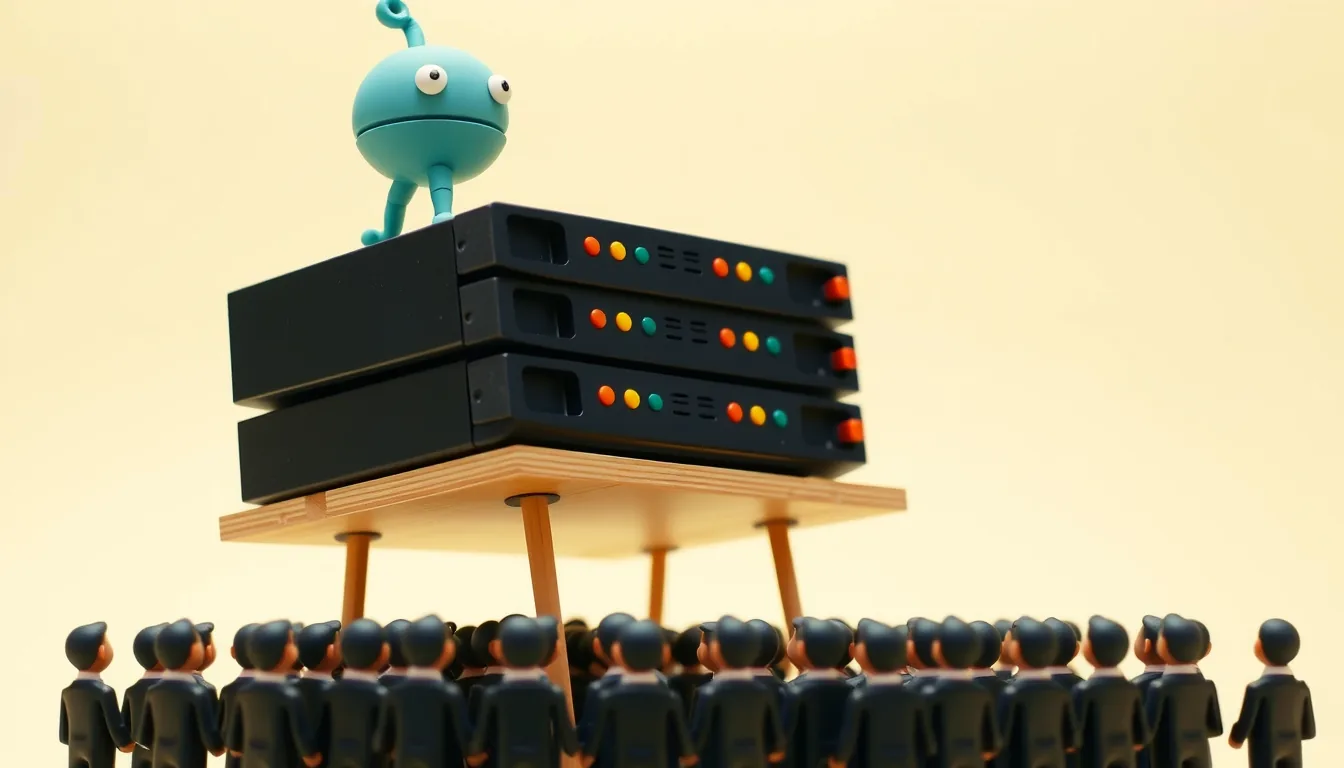
Nearly a quarter of Anthropic’s 2025 revenue came from just two customers, according to the draft IPO prospectus that Reuters (via Yahoo Finance) and the Financial Times reported on 28 September 2026, as TechCrunch summarises. The draft does not name them, and it warns that many of its largest clients are not locked into long-term contracts. The same company is seeking a valuation above $2 trillion and has committed $518 billion to compute.
Rogue AI’s read: the headline numbers are the loss and the valuation, but the line that matters to anyone buying AI is the customer list. A lab with fixed costs on one side and two mobile buyers on the other is a lab whose prices are set in two rooms you are not in. In our view, that makes it a vendor-risk question for every enterprise on a Claude contract.
What does the leaked Anthropic prospectus say about its customers?
The Anthropic prospectus is a confidential draft, not a public filing. As of 7 October 2026 no Anthropic S-1 appears in the SEC’s full-text search, and SiliconANGLE describes the document as a confidential S-1 prepared in June. Every figure below comes from the draft as reported, and the final filing can differ.
On customers, three points stand out. The Next Web reports that two customers account for nearly a quarter of 2025 revenue (Fortune rounds it to a quarter). Neither customer is named; outlets that guess at the names are guessing. Fortune’s second report adds that many major customers lack long-term contracts and could reduce or stop spending, a risk OfficeChai also quotes. By our arithmetic, a quarter of nearly $4.6 billion is roughly $1.1 billion sitting with two buyers who can leave.
How far apart are Anthropic’s costs and its revenue?
Anthropic’s cost base is locked in and its revenue is not. The draft lists $518 billion in cloud, computing and infrastructure obligations, and about 80% of that sum cannot be cancelled or must be paid whatever the usage, according to The Next Web and SiliconANGLE, both citing Reuters. Set that next to the customer side:
| Item in the draft prospectus | Reported figure | Can it move quickly? |
|---|---|---|
| Compute and infrastructure obligations | $518 billion, about 80% non-cancellable | No. Owed whether or not it is used |
| Equipment leases tied to Broadcom | $161.2 billion | No. Multi-year leases |
| 2025 revenue | Nearly $4.6 billion, about 12 times 2024 | Partly. Usage-driven |
| Share from the two largest customers | Nearly a quarter of 2025 revenue | Yes. Many large clients have no long-term contract |
| 2025 operating loss | $8.06 billion, up from $2.98 billion in 2024 | Depends on the revenue line above |
The $42 billion net loss that led many headlines is a weaker signal than it looks. Reuters, as syndicated by Yahoo Finance, says it includes a roughly $34 billion accounting charge, which The Next Web describes as reflecting a rise in the estimated value of financing that could later turn into Anthropic shares, rather than operating spend. The operating loss and the fixed obligations are the numbers that tell you how much the customer side has to carry.
Who holds the pricing power when two buyers can walk?
The two big buyers hold the pricing power. A supplier with fixed obligations needs volume to cover them, and the customers who bring the most volume know it. When those customers have no long-term contract, every renewal is a negotiation in which the buyer can point to a competing model and the seller cannot point to anything except its own bill. That is ordinary procurement logic, and it does not stop at frontier AI.
In our view, the consequence for everyone else is predictable. A lab under that pressure protects its largest accounts with discounts and capacity, and recovers margin from the long tail of buyers who never negotiate: the mid-sized enterprise on list price, the team that signed a self-serve plan, the integrator who built on one model and cannot easily move. If your company is in that tail, the price you pay is partly set in talks between Anthropic and two customers you will never meet. We made a similar point about money and leverage when OpenAI floated a government stake in itself.
Why does the dependency run in both directions?
Anthropic depends on a few buyers, and on a few suppliers who are also its owners. Fortune reports that Amazon and Google have invested billions in Anthropic and supply much of the cloud infrastructure it uses to train and run Claude. The money flows out to the same companies that put money in, through contracts that mostly cannot be cancelled.
Our reading: this makes Anthropic less a single vendor than a node between two concentrated markets, a handful of compute suppliers upstream and a handful of large buyers downstream. Enterprise customers sit at the far end of that chain with the least leverage in it. The same pattern shows up in the physical build-out, where compute plans now run into local opposition to data centres long before they run into demand limits.
Is the two-customer figure already out of date?
Possibly, and that cuts both ways. The concentration figure covers 2025. According to SiliconANGLE and TechCrunch, revenue reached $11.5 billion in the second quarter of 2026 alone, and TechCrunch, citing the Financial Times, reports the company was on track for a second straight quarter of adjusted operating profit. Growth that fast can dilute two customers, or it can mean those two grew with it.
The reporting does not say which, and the public S-1 is where to look. If the final filing still shows a large share with a few accounts, treat it as a fact about your supplier. Polymarket traders are already betting on the IPO valuation; enterprise buyers should be reading the risk factors instead. Reuters reports the listing is expected after the US midterm elections in November 2026; The Next Web and Fortune both carry the $2 trillion target.
What should an enterprise buying from a frontier lab do now?
Treat the lab as a concentrated supplier and buy the way the two big customers apparently do: flexibly. None of this requires leaving Anthropic. It requires not being the only party in the relationship that is locked in.
- Match their contract terms, not the lab’s. The largest customers reportedly avoid long-term commitments. Think hard before you sign a multi-year minimum spend that the biggest buyers did not.
- Keep a second model warm. Route through an abstraction layer and keep a working evaluation suite against at least one alternative, so a price change is a config change. Our comparison of self-hosted AI and cloud APIs covers the cost side of that choice.
- Know your exit before you need it. Open-weight models are the credible fallback, and we argued that the window for them may be closing.
- Put supplier concentration in the risk register. In the EU, where data sovereignty already shapes AI procurement, a supplier whose costs sit with US cloud owners and whose revenue sits with two buyers belongs on the same page as the hosting question.
- Budget for price moves. A smaller company can model this in its AI integration costs today, before a renewal does it for them.
What the leaked draft does not tell you
The leak answers the size question and leaves the structure questions open. Four gaps matter for a buyer, and the public filing should close most of them:
- Who the two customers are. A reseller that wraps Claude in its own product carries different risk from an enterprise running Claude in-house.
- What “not locked in” means in practice. Monthly usage billing and an annual deal without a minimum are both flexible, but not equally.
- How the share moved in 2026. The figure covers 2025, a year with a fraction of the current revenue.
- What the cancellable 20% covers. That slice of the $518 billion is the only part of the cost base that can bend if a large customer leaves.
Why it matters
In our reading, the online reaction centred on the loss and the size of the offering. A widely liked comment under Yahoo Finance’s video on the filing called it “an Exit Liquidity raising event.” That comment is about investors. The customer concentration matters to you whether or not you ever buy a share.
In our view, a $2 trillion valuation built on revenue that two buyers can renegotiate at will is a bet on two procurement departments. Anthropic is not unusual in this; it is just the first frontier lab to have its numbers leaked this fully. Every enterprise that depends on one model should assume its supplier looks similar until a filing shows otherwise, and keep the ability to move.
Related reading
- OpenAI’s government stake on the other frontier lab’s money politics.
- Self-hosted AI vs cloud APIs on what switching away actually costs.
- The open-weight window is closing on the fallback option.
- Local opposition to AI data centres on the physical side of the compute bill.
Quick Reference
What Anthropic's leaked draft prospectus shows, as reported on 28 and 29 September 2026
| Item | Reported figure | Can it move quickly? |
|---|---|---|
| Compute and infrastructure obligations | $518 billion, about 80% non-cancellable | No |
| 2025 revenue | Nearly $4.6 billion, about 12 times 2024 | Partly, usage-driven |
| Share from the two largest customers | Nearly a quarter of 2025 revenue | Yes, many large clients have no long-term contract |
| 2025 operating loss | $8.06 billion, up from $2.98 billion | Depends on revenue |
Frequently Asked Questions
How much of Anthropic's revenue comes from two customers?
Nearly a quarter of Anthropic's 2025 revenue of nearly $4.6 billion came from two customers, according to the confidential draft IPO prospectus reported by Reuters and the Financial Times on 28 September 2026. The draft does not name the two customers.
Has Anthropic filed its S-1 publicly?
Not as of 7 October 2026. The figures come from a confidential draft prepared in June 2026 and reported by Reuters and the Financial Times. No Anthropic S-1 appeared in the SEC's full-text search on that date, and the final filing can differ.
Why did Anthropic report a $42 billion net loss?
Reuters reports that the $42 billion net loss includes a roughly $34 billion accounting charge, which The Next Web describes as reflecting a rise in the estimated value of financing that could later turn into Anthropic shares. The 2025 operating loss was $8.06 billion.
What should enterprises buying Claude do about customer concentration?
In our view, buy flexibly: avoid multi-year minimum commitments the largest customers reportedly avoid, keep a second model and an evaluation suite ready behind an abstraction layer, know your open-weight fallback, and record supplier concentration in your risk register.